
 Addressing the challenges of ultra-high precision and microscale is a core area of strength. The flanges of vacuum chambers required for semiconductor equipment must meet the flatness of 0.002mm/100mm and the surface cleanliness grade of ISO Class 1. This relies on the coordinate grinding process with nanometer-level precision, in combination with the online compensation system of the laser interferometer, to control the machine tool positioning error within ±0.5μm/300mm. When the Swiss GF Mikron HSM 500 machine tool performs micro-turning of medical bone screws, the radial runout is maintained to be less than 0.8μm at a rotational speed of 50,000 RPM through the air-floating spindle. When processing the thread of orthopedic screws with a diameter of 0.3mm, the contour deviation does not exceed 1μm. Stryker, a well-known manufacturer, disclosed that in collaboration with its certified suppliers, it has developed knee replacement components using a combined process of slow wire electrical discharge machining and micro-electrolysis. This has improved the accuracy of key surface fit to 7μm, significantly reduced the postoperative wear rate to an average of 0.15mm³ per year, and extended the service life of the prosthesis to over 20 years.
The integration of materials science expertise and special processes addresses the demands of extreme working conditions. The injection plate of the rocket engine combustion chamber needs to drill 5,000 micro-holes with a diameter of 0.3±0.005mm on a 3mm thick molybdenum-rhenium alloy plate. The combined process of electrical discharge machining and ultrasonic-assisted drilling is adopted to ensure that the verticality error of the holes with a depth-to-diameter ratio of 15:1 is less than 0.02mm. For polyetheretherketone (PEEK) orthopedic implants, vacuum clamping and liquid nitrogen cooling systems can maintain the temperature in the processing area at -50℃±3℃, preventing the deformation of the 0.2mm pillar of the 3D-printed trabecular bone structure caused by thermal deformation. Tesla disclosed in its 4680 battery project that the precision factory it collaborated with successfully mass-produced liquid-cooled plates with a volume of only 12cm³. By using diffusion welding technology to combine 0.3mm thick 6061 aluminum alloy flow channel plates, the working pressure resistance range reached 30bar, and the leakage rate was lower than 1×10⁻⁹ mbar·L/s. The heat exchange efficiency is 40% higher than that of the traditional design.
The intelligent quality assurance system and the agile supply chain constitute the delivery competitiveness. The top-of-the-line cnc machining services factory deploys an online laser measurement system to perform 100% full-size monitoring. The Zeiss O-INSPECT composite measuring machine collects 2,500 three-dimensional point cloud data per second and generates an inspection report containing more than 300 positional tolerances in just 3 minutes. The blockchain-based material traceability platform ensures that each titanium alloy TC4 billet has an electronic record containing 50 chemical and mechanical performance parameters, reducing the risk of material misuse to less than 0.2%. By applying the MES system to integrate machine tool data, Toyota's transmission housing project achieved a yield rate of 99.4% in the first month of mass production and shortened the delivery cycle by 40%. According to the satellite project data of Lockheed Martin, its precision structural component supplier has reduced the median manufacturing deviation of complex waveguide components from the original 8μm to 2.3μm by implementing digital twin-driven process optimization, cut rework costs by 750,000 US dollars, and increased the on-time delivery rate of the project to 98.7%.
Addressing the challenges of ultra-high precision and microscale is a core area of strength. The flanges of vacuum chambers required for semiconductor equipment must meet the flatness of 0.002mm/100mm and the surface cleanliness grade of ISO Class 1. This relies on the coordinate grinding process with nanometer-level precision, in combination with the online compensation system of the laser interferometer, to control the machine tool positioning error within ±0.5μm/300mm. When the Swiss GF Mikron HSM 500 machine tool performs micro-turning of medical bone screws, the radial runout is maintained to be less than 0.8μm at a rotational speed of 50,000 RPM through the air-floating spindle. When processing the thread of orthopedic screws with a diameter of 0.3mm, the contour deviation does not exceed 1μm. Stryker, a well-known manufacturer, disclosed that in collaboration with its certified suppliers, it has developed knee replacement components using a combined process of slow wire electrical discharge machining and micro-electrolysis. This has improved the accuracy of key surface fit to 7μm, significantly reduced the postoperative wear rate to an average of 0.15mm³ per year, and extended the service life of the prosthesis to over 20 years.
The integration of materials science expertise and special processes addresses the demands of extreme working conditions. The injection plate of the rocket engine combustion chamber needs to drill 5,000 micro-holes with a diameter of 0.3±0.005mm on a 3mm thick molybdenum-rhenium alloy plate. The combined process of electrical discharge machining and ultrasonic-assisted drilling is adopted to ensure that the verticality error of the holes with a depth-to-diameter ratio of 15:1 is less than 0.02mm. For polyetheretherketone (PEEK) orthopedic implants, vacuum clamping and liquid nitrogen cooling systems can maintain the temperature in the processing area at -50℃±3℃, preventing the deformation of the 0.2mm pillar of the 3D-printed trabecular bone structure caused by thermal deformation. Tesla disclosed in its 4680 battery project that the precision factory it collaborated with successfully mass-produced liquid-cooled plates with a volume of only 12cm³. By using diffusion welding technology to combine 0.3mm thick 6061 aluminum alloy flow channel plates, the working pressure resistance range reached 30bar, and the leakage rate was lower than 1×10⁻⁹ mbar·L/s. The heat exchange efficiency is 40% higher than that of the traditional design.
The intelligent quality assurance system and the agile supply chain constitute the delivery competitiveness. The top-of-the-line cnc machining services factory deploys an online laser measurement system to perform 100% full-size monitoring. The Zeiss O-INSPECT composite measuring machine collects 2,500 three-dimensional point cloud data per second and generates an inspection report containing more than 300 positional tolerances in just 3 minutes. The blockchain-based material traceability platform ensures that each titanium alloy TC4 billet has an electronic record containing 50 chemical and mechanical performance parameters, reducing the risk of material misuse to less than 0.2%. By applying the MES system to integrate machine tool data, Toyota's transmission housing project achieved a yield rate of 99.4% in the first month of mass production and shortened the delivery cycle by 40%. According to the satellite project data of Lockheed Martin, its precision structural component supplier has reduced the median manufacturing deviation of complex waveguide components from the original 8μm to 2.3μm by implementing digital twin-driven process optimization, cut rework costs by 750,000 US dollars, and increased the on-time delivery rate of the project to 98.7%.What can a CNC machining services factory offer for complex components?
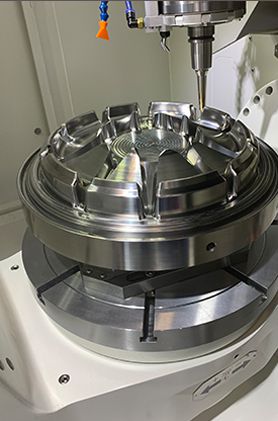
The core value of the high-end cnc machining services factory lies in its multi-axis linkage technology capability for handling extreme geometric complexity. Equipped with equipment such as the Hermle C62 five-axis machining center, its numerical control system can synchronously control the compound motion of the milling spindle with a speed of up to 72,000 RPM and the cradle turntable in real time, precisely machining structures with a deep cavity with a negative Angle of more than 60 degrees. It is typically applied to parts of the combustion chamber casing of aero engines. The diameter tolerance of all 150 cooling gas film holes should be controlled within ±0.02mm, and the position accuracy CPK value should be stably maintained above 1.67. By combining the HSK-A63 tool holder system with a cemented carbide coated tool with a diameter of only 0.2mm, a micro-blade structure with a thickness of 0.15mm can be machined on the Inconel 718 superalloy substrate, and the surface roughness is stably controlled below Ra 0.4μm. Boeing's technical report indicates that the titanium alloy forgings of its 787 landing gear have undergone five-axis high-speed processing in a professional factory, with the material removal rate increased to 120cm³/min. At the same time, the production cycle required by the traditional process, which was 30 days, has been shortened to 18 days.
Addressing the challenges of ultra-high precision and microscale is a core area of strength. The flanges of vacuum chambers required for semiconductor equipment must meet the flatness of 0.002mm/100mm and the surface cleanliness grade of ISO Class 1. This relies on the coordinate grinding process with nanometer-level precision, in combination with the online compensation system of the laser interferometer, to control the machine tool positioning error within ±0.5μm/300mm. When the Swiss GF Mikron HSM 500 machine tool performs micro-turning of medical bone screws, the radial runout is maintained to be less than 0.8μm at a rotational speed of 50,000 RPM through the air-floating spindle. When processing the thread of orthopedic screws with a diameter of 0.3mm, the contour deviation does not exceed 1μm. Stryker, a well-known manufacturer, disclosed that in collaboration with its certified suppliers, it has developed knee replacement components using a combined process of slow wire electrical discharge machining and micro-electrolysis. This has improved the accuracy of key surface fit to 7μm, significantly reduced the postoperative wear rate to an average of 0.15mm³ per year, and extended the service life of the prosthesis to over 20 years.
The integration of materials science expertise and special processes addresses the demands of extreme working conditions. The injection plate of the rocket engine combustion chamber needs to drill 5,000 micro-holes with a diameter of 0.3±0.005mm on a 3mm thick molybdenum-rhenium alloy plate. The combined process of electrical discharge machining and ultrasonic-assisted drilling is adopted to ensure that the verticality error of the holes with a depth-to-diameter ratio of 15:1 is less than 0.02mm. For polyetheretherketone (PEEK) orthopedic implants, vacuum clamping and liquid nitrogen cooling systems can maintain the temperature in the processing area at -50℃±3℃, preventing the deformation of the 0.2mm pillar of the 3D-printed trabecular bone structure caused by thermal deformation. Tesla disclosed in its 4680 battery project that the precision factory it collaborated with successfully mass-produced liquid-cooled plates with a volume of only 12cm³. By using diffusion welding technology to combine 0.3mm thick 6061 aluminum alloy flow channel plates, the working pressure resistance range reached 30bar, and the leakage rate was lower than 1×10⁻⁹ mbar·L/s. The heat exchange efficiency is 40% higher than that of the traditional design.
The intelligent quality assurance system and the agile supply chain constitute the delivery competitiveness. The top-of-the-line cnc machining services factory deploys an online laser measurement system to perform 100% full-size monitoring. The Zeiss O-INSPECT composite measuring machine collects 2,500 three-dimensional point cloud data per second and generates an inspection report containing more than 300 positional tolerances in just 3 minutes. The blockchain-based material traceability platform ensures that each titanium alloy TC4 billet has an electronic record containing 50 chemical and mechanical performance parameters, reducing the risk of material misuse to less than 0.2%. By applying the MES system to integrate machine tool data, Toyota's transmission housing project achieved a yield rate of 99.4% in the first month of mass production and shortened the delivery cycle by 40%. According to the satellite project data of Lockheed Martin, its precision structural component supplier has reduced the median manufacturing deviation of complex waveguide components from the original 8μm to 2.3μm by implementing digital twin-driven process optimization, cut rework costs by 750,000 US dollars, and increased the on-time delivery rate of the project to 98.7%.
Addressing the challenges of ultra-high precision and microscale is a core area of strength. The flanges of vacuum chambers required for semiconductor equipment must meet the flatness of 0.002mm/100mm and the surface cleanliness grade of ISO Class 1. This relies on the coordinate grinding process with nanometer-level precision, in combination with the online compensation system of the laser interferometer, to control the machine tool positioning error within ±0.5μm/300mm. When the Swiss GF Mikron HSM 500 machine tool performs micro-turning of medical bone screws, the radial runout is maintained to be less than 0.8μm at a rotational speed of 50,000 RPM through the air-floating spindle. When processing the thread of orthopedic screws with a diameter of 0.3mm, the contour deviation does not exceed 1μm. Stryker, a well-known manufacturer, disclosed that in collaboration with its certified suppliers, it has developed knee replacement components using a combined process of slow wire electrical discharge machining and micro-electrolysis. This has improved the accuracy of key surface fit to 7μm, significantly reduced the postoperative wear rate to an average of 0.15mm³ per year, and extended the service life of the prosthesis to over 20 years.
The integration of materials science expertise and special processes addresses the demands of extreme working conditions. The injection plate of the rocket engine combustion chamber needs to drill 5,000 micro-holes with a diameter of 0.3±0.005mm on a 3mm thick molybdenum-rhenium alloy plate. The combined process of electrical discharge machining and ultrasonic-assisted drilling is adopted to ensure that the verticality error of the holes with a depth-to-diameter ratio of 15:1 is less than 0.02mm. For polyetheretherketone (PEEK) orthopedic implants, vacuum clamping and liquid nitrogen cooling systems can maintain the temperature in the processing area at -50℃±3℃, preventing the deformation of the 0.2mm pillar of the 3D-printed trabecular bone structure caused by thermal deformation. Tesla disclosed in its 4680 battery project that the precision factory it collaborated with successfully mass-produced liquid-cooled plates with a volume of only 12cm³. By using diffusion welding technology to combine 0.3mm thick 6061 aluminum alloy flow channel plates, the working pressure resistance range reached 30bar, and the leakage rate was lower than 1×10⁻⁹ mbar·L/s. The heat exchange efficiency is 40% higher than that of the traditional design.
The intelligent quality assurance system and the agile supply chain constitute the delivery competitiveness. The top-of-the-line cnc machining services factory deploys an online laser measurement system to perform 100% full-size monitoring. The Zeiss O-INSPECT composite measuring machine collects 2,500 three-dimensional point cloud data per second and generates an inspection report containing more than 300 positional tolerances in just 3 minutes. The blockchain-based material traceability platform ensures that each titanium alloy TC4 billet has an electronic record containing 50 chemical and mechanical performance parameters, reducing the risk of material misuse to less than 0.2%. By applying the MES system to integrate machine tool data, Toyota's transmission housing project achieved a yield rate of 99.4% in the first month of mass production and shortened the delivery cycle by 40%. According to the satellite project data of Lockheed Martin, its precision structural component supplier has reduced the median manufacturing deviation of complex waveguide components from the original 8μm to 2.3μm by implementing digital twin-driven process optimization, cut rework costs by 750,000 US dollars, and increased the on-time delivery rate of the project to 98.7%.Specs that actually fit your face — and your story.
Hand-picked frames from 38 ateliers, lenses cut in 48 hours, and a 30-day "Love Them or Lose Them" return window.