
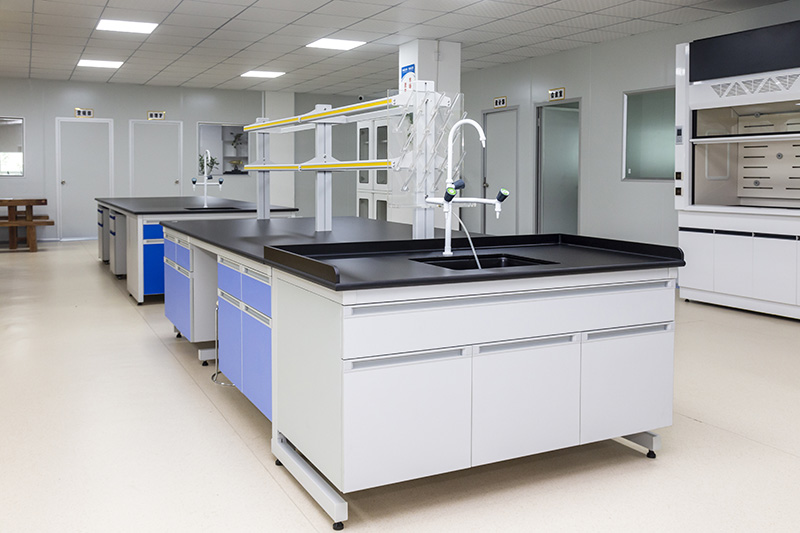
 Customized solutions have become a core competitiveness. Leading manufacturers can provide modular components with a tolerance of no more than ±1 millimeter, enabling laboratories to complete the reorganization of functional areas within 72 hours. Market research shows that laboratories with flexible design have a 35% increase in space utilization and a 50% lower renovation cost than traditional layouts. Looking back at the case of a certain interdisciplinary research institute in Germany, it has increased the work efficiency of researchers of different heights by 18% and reduced complaints about equipment adaptability by 90% through an intelligent workbench with adjustable height. This human-centered design philosophy is like providing scientists with an "experimental Rubik's Cube" that can be changed at will.
Supply chain resilience has built another barrier. Top manufacturers have compressed the raw material procurement cycle from 45 days to 20 days through global digital networks and kept the probability of production delays below 2%. The industry report for the first quarter of 2024 indicates that enterprises with vertically integrated supply chains can withstand market price fluctuations of up to 15% while maintaining a customer order accuracy rate of 99.5%. When the global logistics crisis causes ordinary suppliers to delay delivery by 60 days, these enterprises can still ensure that the project schedule deviation does not exceed 5 working days. This stability is like the cornerstone that anchors a giant ship in a storm.
Ultimately, the service boundary has extended from product delivery to lifetime value management. Leading enterprises offer service agreements that include preventive maintenance once a quarter, reducing the total life cycle cost of equipment by 20%. Data shows that laboratories that have established strategic partnerships with manufacturers can optimize their annual operating budgets by 12% and maintain equipment availability rates above 99%. As a Nobel laureate once said, "Outstanding scientific discoveries require an ultimate environmental support." It is precisely through this meticulous escort throughout the entire life cycle of the laboratory that modern manufacturers have become invisible partners in scientific research and innovation.
Customized solutions have become a core competitiveness. Leading manufacturers can provide modular components with a tolerance of no more than ±1 millimeter, enabling laboratories to complete the reorganization of functional areas within 72 hours. Market research shows that laboratories with flexible design have a 35% increase in space utilization and a 50% lower renovation cost than traditional layouts. Looking back at the case of a certain interdisciplinary research institute in Germany, it has increased the work efficiency of researchers of different heights by 18% and reduced complaints about equipment adaptability by 90% through an intelligent workbench with adjustable height. This human-centered design philosophy is like providing scientists with an "experimental Rubik's Cube" that can be changed at will.
Supply chain resilience has built another barrier. Top manufacturers have compressed the raw material procurement cycle from 45 days to 20 days through global digital networks and kept the probability of production delays below 2%. The industry report for the first quarter of 2024 indicates that enterprises with vertically integrated supply chains can withstand market price fluctuations of up to 15% while maintaining a customer order accuracy rate of 99.5%. When the global logistics crisis causes ordinary suppliers to delay delivery by 60 days, these enterprises can still ensure that the project schedule deviation does not exceed 5 working days. This stability is like the cornerstone that anchors a giant ship in a storm.
Ultimately, the service boundary has extended from product delivery to lifetime value management. Leading enterprises offer service agreements that include preventive maintenance once a quarter, reducing the total life cycle cost of equipment by 20%. Data shows that laboratories that have established strategic partnerships with manufacturers can optimize their annual operating budgets by 12% and maintain equipment availability rates above 99%. As a Nobel laureate once said, "Outstanding scientific discoveries require an ultimate environmental support." It is precisely through this meticulous escort throughout the entire life cycle of the laboratory that modern manufacturers have become invisible partners in scientific research and innovation.What to Expect from Modern Lab Furniture Manufacturers Today?
Today, leading modern lab furniture manufacturers have made intelligent integration a standard configuration. More than 90% of high-end laboratory benches are equipped with Internet of Things sensors that can monitor temperature, humidity and usage status data in real time. The 2024 industry white paper shows that this type of smart furniture can automatically adjust the face velocity of the fume hood to an accuracy of 0.5 meters per second ±0.05, reducing energy consumption by 25% and simultaneously increasing the accuracy rate of equipment failure early warning to 98%. For instance, a certain gene sequencing center has reduced the incidence of sample contamination incidents from three times a year to zero by deploying an intelligent laboratory system, which is equivalent to avoiding potential losses of approximately 500,000 US dollars. This is like implanting a dynamic nervous system in the laboratory, endowing each work unit with the ability to perceive and respond.
In terms of sustainable development, 75% of manufacturers use environmentally friendly materials, such as steel with 40% recycled components and epoxy resin countertops with zero formaldehyde emissions, reducing the carbon footprint of their products by 30%. According to the data from the Green Lab Initiative, the lifespan of furniture made of these materials can be extended to 20 years, and the recycling rate after disposal can be as high as 85%. A typical case is the Shanghai Low-Carbon Research Park, which was completed in 2023. Through a customized circulating ventilation system, it saves 120,000 kilowatt-hours of electricity annually, equivalent to reducing 60 tons of carbon emissions. This model of quantifying ecological benefits into financial value is reshaping the formula for calculating the return on investment in laboratory construction.
Customized solutions have become a core competitiveness. Leading manufacturers can provide modular components with a tolerance of no more than ±1 millimeter, enabling laboratories to complete the reorganization of functional areas within 72 hours. Market research shows that laboratories with flexible design have a 35% increase in space utilization and a 50% lower renovation cost than traditional layouts. Looking back at the case of a certain interdisciplinary research institute in Germany, it has increased the work efficiency of researchers of different heights by 18% and reduced complaints about equipment adaptability by 90% through an intelligent workbench with adjustable height. This human-centered design philosophy is like providing scientists with an "experimental Rubik's Cube" that can be changed at will.
Supply chain resilience has built another barrier. Top manufacturers have compressed the raw material procurement cycle from 45 days to 20 days through global digital networks and kept the probability of production delays below 2%. The industry report for the first quarter of 2024 indicates that enterprises with vertically integrated supply chains can withstand market price fluctuations of up to 15% while maintaining a customer order accuracy rate of 99.5%. When the global logistics crisis causes ordinary suppliers to delay delivery by 60 days, these enterprises can still ensure that the project schedule deviation does not exceed 5 working days. This stability is like the cornerstone that anchors a giant ship in a storm.
Ultimately, the service boundary has extended from product delivery to lifetime value management. Leading enterprises offer service agreements that include preventive maintenance once a quarter, reducing the total life cycle cost of equipment by 20%. Data shows that laboratories that have established strategic partnerships with manufacturers can optimize their annual operating budgets by 12% and maintain equipment availability rates above 99%. As a Nobel laureate once said, "Outstanding scientific discoveries require an ultimate environmental support." It is precisely through this meticulous escort throughout the entire life cycle of the laboratory that modern manufacturers have become invisible partners in scientific research and innovation.
Customized solutions have become a core competitiveness. Leading manufacturers can provide modular components with a tolerance of no more than ±1 millimeter, enabling laboratories to complete the reorganization of functional areas within 72 hours. Market research shows that laboratories with flexible design have a 35% increase in space utilization and a 50% lower renovation cost than traditional layouts. Looking back at the case of a certain interdisciplinary research institute in Germany, it has increased the work efficiency of researchers of different heights by 18% and reduced complaints about equipment adaptability by 90% through an intelligent workbench with adjustable height. This human-centered design philosophy is like providing scientists with an "experimental Rubik's Cube" that can be changed at will.
Supply chain resilience has built another barrier. Top manufacturers have compressed the raw material procurement cycle from 45 days to 20 days through global digital networks and kept the probability of production delays below 2%. The industry report for the first quarter of 2024 indicates that enterprises with vertically integrated supply chains can withstand market price fluctuations of up to 15% while maintaining a customer order accuracy rate of 99.5%. When the global logistics crisis causes ordinary suppliers to delay delivery by 60 days, these enterprises can still ensure that the project schedule deviation does not exceed 5 working days. This stability is like the cornerstone that anchors a giant ship in a storm.
Ultimately, the service boundary has extended from product delivery to lifetime value management. Leading enterprises offer service agreements that include preventive maintenance once a quarter, reducing the total life cycle cost of equipment by 20%. Data shows that laboratories that have established strategic partnerships with manufacturers can optimize their annual operating budgets by 12% and maintain equipment availability rates above 99%. As a Nobel laureate once said, "Outstanding scientific discoveries require an ultimate environmental support." It is precisely through this meticulous escort throughout the entire life cycle of the laboratory that modern manufacturers have become invisible partners in scientific research and innovation.Specs that actually fit your face — and your story.
Hand-picked frames from 38 ateliers, lenses cut in 48 hours, and a 30-day "Love Them or Lose Them" return window.